Data visualization
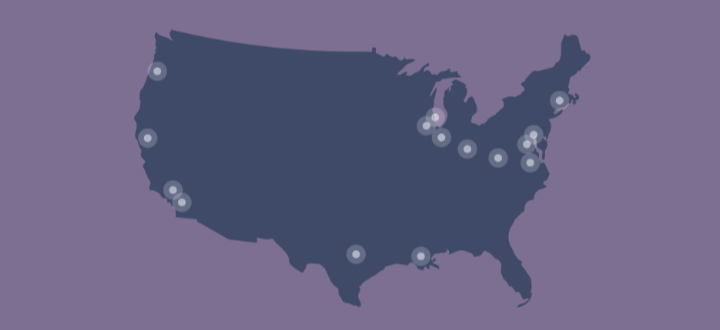
Mapping the road to college
2020
Description
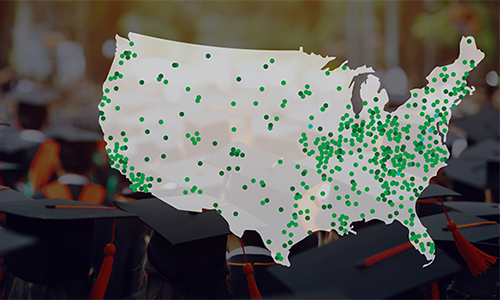
College Explorer from NWEA® helps students, parents, and teachers develop pathways to higher education. This powerful tool links MAP® Growth™ scores with national benchmarks for colleges, universities, and even specific majors. Together with goal setting and parent conferences, College Explorer can help students develop a plan, consider new possibilities, and put post-secondary dreams within reach.
See MoreAssociated Research
Blog article

Media mention
Related Topics
A level playing field: College readiness standards
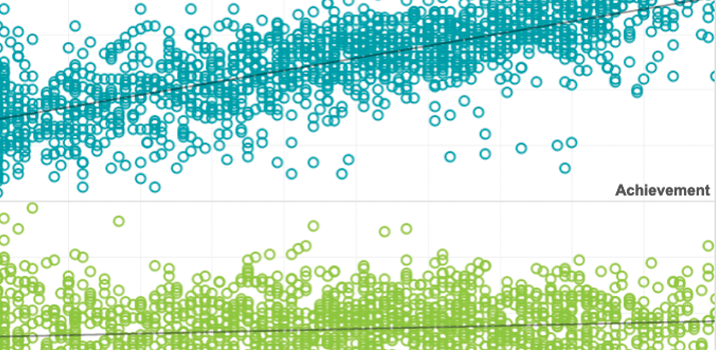
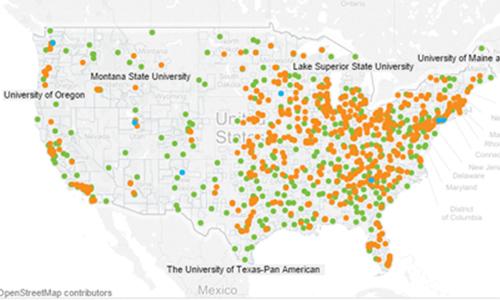
Some of our assumptions about the growth and performance of students from high-poverty schools relative to their peers from wealthier schools may be challenged in this data gallery, where you can explore how school poverty level interacts with student growth, college readiness, and college access.
Topics: Equity, College & career readiness

Moving from data to making a difference
The problems faced within education resemble the problems in many social settings in that they lack clear definitions, have many potential causes, lack simple solutions, and defy straightforward measurement. In this article, Andrew Hegedus shares a view on the types of problems faced in education and outlines key characteristics of a process that begins with collecting data and ends with evaluating progress.
Topics: Empowering educators, High school, High-growth schools & practices
A level playing field: College readiness standards
This study examines the academic growth of 35,000 elementary and middle school students in 31 states—all of them high achievers within their own schools—over a three-year period.
Topics: Equity, College & career readiness
Developing more meaningful definitions of college readiness
Complementing traditional quantitative measures with more qualitative tools can help determine college and career readiness.

The potential of adaptive assessment
In this article, the authors explain how CAT provides a more precise, accurate picture of the achievement levels of both low-achieving and high-achieving students by adjusting questions as the testing goes along. The immediate, informative test results enable teachers to differentiate instruction to meet individual students’ current academic needs.
Topics: Innovations in reporting & assessment, Measurement & scaling, Student growth & accountability policies
The utility of adaptive testing in addressing the problem of unmotivated examinees
This integrative review examines the motivational benefits of computerized adaptive tests (CATs), and demonstrates that they can have important advantages over conventional tests in both identifying instances when examinees are exhibiting low effort, and effectively addressing the validity threat posed by unmotivated examinees.
Topics: Measurement & scaling, Innovations in reporting & assessment, School & test engagement
Effort analysis: Individual score validation of achievement test data
Whenever the purpose of measurement is to inform an inference about a student’s achievement level, it is important that we be able to trust that the student’s test score accurately reflects what that student knows and can do. Such trust requires the assumption that a student’s test event is not unduly influenced by construct-irrelevant factors that could distort his score. This article examines one such factor—test-taking motivation—that tends to induce a person-specific, systematic negative bias on test scores.
Topics: Measurement & scaling, Innovations in reporting & assessment, School & test engagement