Research brief
Education’s long COVID: 2022–23 achievement data reveal stalled progress toward pandemic recovery
July 2023

Description
This new research brief continues the ongoing research by NWEA examining the impact of the COVID-19 pandemic on student achievement and progress toward academic recovery.
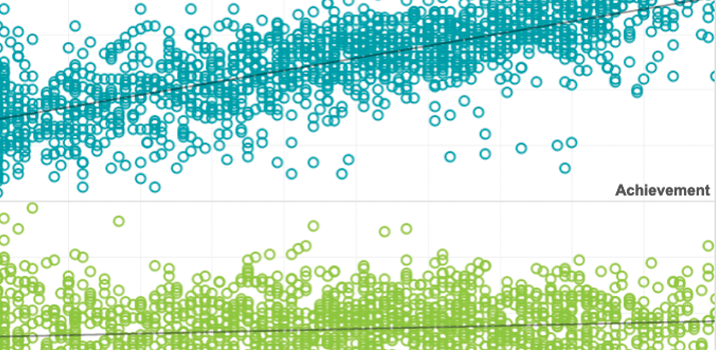
Using data from 6.7 million U.S. public school students currently in grades 3 – 8, the study examined academic gains in the 2022-23 school year relative to pre-pandemic years. It also tracked the gap in achievement between the COVID year student group compared to their pre-pandemic peers.
Key findings show that while learning did continue, progress toward academic recovery stalled in the 2022-23 school year. Significant achievement gaps persist at the end of the 2022-23 school year, and the average student will need the equivalent of 4.1 additional months of schooling to catch up in reading and 4.5 months in math.
See MoreTopics: COVID-19 & schools, Equity
Associated Research

Related Topics

Technical Appendix for Chronic absenteeism: A continued impediment to academic recovery
This is the technical appendix for “Chronic absenteeism: A continued impediment to academic recovery,” research brief, which examines the relationship between chronic absenteeism and academic recovery from COVID-era disruptions to learning.
Products: MAP Growth
Topics: COVID-19 & schools, Growth

Chronic absenteeism: A continued impediment to academic recovery
This research brief examines the relationship between chronic absenteeism and academic recovery from COVID-era disruptions to learning. Using MAP Growth data from 2,000 US school districts, NWEA researchers analyzed whether persistently high absenteeism rates were associated with slower recovery in math and reading.
Products: MAP Growth
Topics: COVID-19 & schools, Growth

This is the technical appendix to the research, “Academically diverse classrooms, deeper needs,” research brief examines the academic diversity of post-COVID classrooms, including the composition and spread of academic achievement levels. Key findings highlight the challenges facing educators as more students are off-track and further behind grade-level proficiency.
Products: MAP Growth
Topics: COVID-19 & schools, Empowering educators, Growth, Informing instruction

Academically diverse classrooms, deeper needs: What teachers face after the pandemic
This research brief examines the academic diversity of post-COVID classrooms, including the composition and spread of academic achievement levels. Key findings highlight the challenges facing educators as more students are off-track and further behind grade-level proficiency.
Products: MAP Growth
Topics: COVID-19 & schools, Empowering educators, Growth, Informing instruction
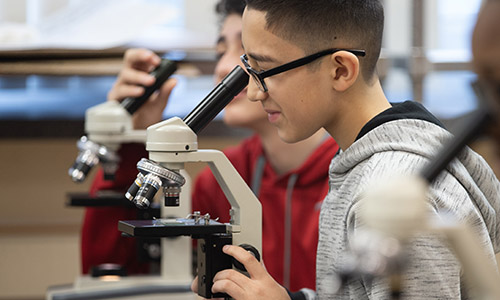
This white paper examines the landscape of middle school science course offerings, enrollment patterns, and assessment outcomes. The analysis of data from 2,200 schools finds that multi-disciplinary course models now dominate versus single-course offerings, though access to course types varies by race and ethnicity. In addition, students in different course models performed similarly on assessments.
Products: MAP Growth
Topics: Equity, Math & STEM
A Practical Guide for Considering and Interpreting Test Score Differences Among Student Subgroups
This guide offers recommendations for how to understand what differences may exist when looking at data for student groups, and gives leaders some structure for how they might consider and interpret those differences.
Products: MAP Growth
Topics: Empowering educators, Equity, Growth, Guidance
Spanish MAP Reading Fluency Technical Report
This technical report outlines the design, scoring, reliability, and validity of the Spanish MAP Reading Fluency assessment, demonstrating how it measures foundational skills and oral reading fluency to support early literacy development.
Products: MAP Reading Fluency
Topics: Early learning, Equity, Measurement & scaling, Test design