Susan Kowalski, PhD
Lead Research Scientist

Susan Kowalski’s work focuses on the intersection of educational policy and science instruction in the United States. Her research employs quantitative and descriptive methods to explore the impact of state and district decisions on science education, including curriculum development and professional learning experiences.
Before joining NWEA, Dr. Kowalski was a senior research scientist and director of research at BSCS Science Learning. She began her career teaching high school physics and physical science in Bloomington, Minnesota, and earned her PhD in curriculum and instruction from the University of Minnesota.
Publications by Susan Kowalski
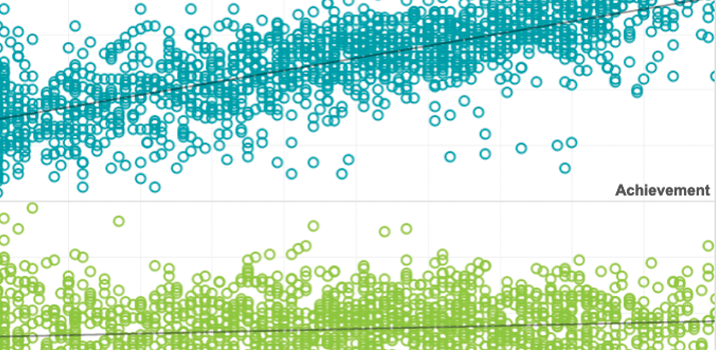
Using a case study from a U.S. school district, this research brief examines the practices and conditions of a coherent instructional system, and where and how it had the most impact. It offers a practical model that leaders can adapt in their own schools to help strengthen instruction across classrooms.
Products: MAP Growth
Topics: Empowering educators, Growth, Informing instruction, Math & STEM

This is the technical appendix to the research brief, “The Power of Connectedness: A Case for a Coherent Instructional System for Reading and Science Improvement,” which examines the practices and conditions of a coherent instructional system, and where and how it had the most impact.
Products: MAP Growth
Topics: Empowering educators, Growth, Informing instruction, Math & STEM

The College Explorer from NWEA® helps students, parents, and teachers develop pathways to higher education. This powerful tool links MAP® Growth™ scores with national benchmarks for colleges, universities, and even specific majors. Together with goal setting and parent conferences, College Explorer can help students develop a plan, consider new possibilities, and put post-secondary dreams within reach.
Topics: Innovations in reporting & assessment, College & career readiness, High school
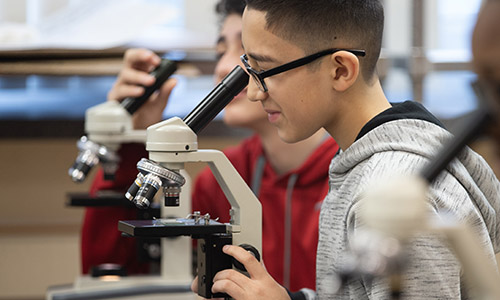
This white paper examines the landscape of middle school science course offerings, enrollment patterns, and assessment outcomes. The analysis of data from 2,200 schools finds that multi-disciplinary course models now dominate versus single-course offerings, though access to course types varies by race and ethnicity. In addition, students in different course models performed similarly on assessments.
Products: MAP Growth
Topics: Equity, Math & STEM
Technical appendix for “Hot test days, lower math scores: How heat affects student achievement”
This is the technical appendix to “Hot test days, lower math scores: How heat affects student achievement” research report that examines the impact of environmental temperatures on student performance in math and reading, and whether those effects are more extreme for students in high-poverty schools, where cooling conditions may be less reliable.
Products: MAP Growth
Hot test days, lower math scores: How heat affects student achievement
This NWEA research report examines the impact of environmental temperatures on student performance in math and reading, and whether those effects are more extreme for students in high-poverty schools, where cooling conditions may be less reliable.
Products: MAP Growth

Integrating Literacy and Science: A Powerful Partnership for Student Success
This research brief explores the connection between science and literacy instruction documenting the benefits of integrated science and literacy instruction at the elementary level, and highlighting the benefits of integrating instruction while providing research-based guidance on how to effectively do this.
Topics: Growth, Equity, Informing instruction, Math & STEM