Innovations in reporting & assessment
Emerging technologies allow for a variety of methods to assess students and report data specific to the needs of different stakeholders. These various approaches can result in assessments that are more engaging for students, along with reporting that provides more insightful, useful information for students, families, and educators.

Researchers can detect when students aren’t trying on computerized tests
A testing company spots disengaged students who are guessing answers too quickly.
The Hechinger Report
Topics: Equity, Innovations in reporting & assessment, School & test engagement
Ability to identify rapid guessing stands to improve interventions
Research at NWEA provides insight into rapid-guessing and what it means for students and educators.
Education Dive
Topics: Equity, Innovations in reporting & assessment, School & test engagement
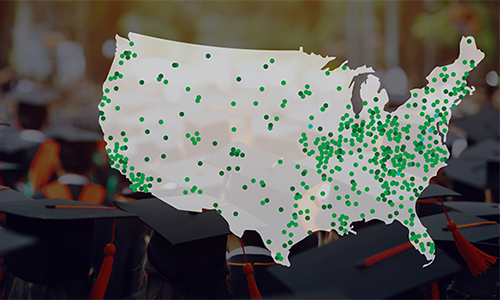
College Explorer from NWEA® helps students, parents, and teachers develop pathways to higher education. This powerful tool links MAP® Growth™ scores with national benchmarks for colleges, universities, and even specific majors.
Topics: Innovations in reporting & assessment, College & career readiness, High school

Upgraded program helps students map a pathway to college
Updated College Explorer provides educators, students, and parents with insights into which colleges and universities students are already on track to enter, and the academic growth goals they need in order to reach the median ACT or SAT score at those colleges and universities.
District Administration
Topics: Innovations in reporting & assessment, College & career readiness, High school

What happens when test takers disengage?
Learn about recent research findings on test taking engagement and what it means for educators.
Topics: Innovations in reporting & assessment, School & test engagement

The impact of test-taking disengagement on item content representation
Rapid-guessing can distort test scores and adversely affect measurement. New research shows how disengaged responses can also distort content representation.
Topics: Measurement & scaling, Innovations in reporting & assessment, School & test engagement

Predicting the difficulty and response time of multiple choice questions using transfer learning
This paper reports on whether transfer learning can improve the prediction of the difficulty and response time parameters for ≈ 18,000 multiple-choice questions from a high-stakes medical exam.