Journal article
ELLs on the cusp: Should we reclassify?
2020
American Educator

Abstract
This article explores the complexities teachers face in determining when English Learner students near the proficiency threshold should be reclassified, and provides important recent research findings to help guide the decision-making process.
This article was published outside of NWEA. The full text can be found at the link above.
Topics: Equity, English Language Learners
Related Topics

This white paper examines the landscape of middle school science course offerings, enrollment patterns, and assessment outcomes. The analysis of data from 2,200 schools finds that multi-disciplinary course models now dominate versus single-course offerings, though access to course types varies by race and ethnicity. In addition, students in different course models performed similarly on assessments.
Products: MAP Growth
Topics: Equity, Math & STEM

A Practical Guide for Considering and Interpreting Test Score Differences Among Student Subgroups
This guide offers recommendations for how to understand what differences may exist when looking at data for student groups, and gives leaders some structure for how they might consider and interpret those differences.
Products: MAP Growth
Topics: Empowering educators, Equity, Growth, Guidance

Spanish MAP Reading Fluency Technical Report
This technical report outlines the design, scoring, reliability, and validity of the Spanish MAP Reading Fluency assessment, demonstrating how it measures foundational skills and oral reading fluency to support early literacy development.
Products: MAP Reading Fluency
Topics: Early learning, Equity, Measurement & scaling, Test design
MAP Growth Spanish Technical Report- Addendum
This technical addendum report is written to help measurement professionals and administrators evaluate the quality of the MAP Growth’s Spanish assessments.
Products: MAP Growth, MAP Spanish
Topics: Equity, Item response theory, Measurement & scaling, Test design

Unequal Access to 8th-Grade Algebra: How School Offerings and Placement Practices Limit Opportunity
This NWEA research brief examines how access to early Algebra – a key gateway to advanced high school math, STEM majors, and higher lifetime earnings – remains highly inequitable across the United States. Using NWEA data from 162,000 eighth-grade students across 22 states, the study looks at both whether schools offer Algebra by 8th grade and how students are placed when it is offered. The findings point to significant gaps tied to school poverty levels, geography, and race/ethnicity.
Topics: College & career readiness, Equity, Math & STEM

This is the technical appendix to the “Unequal Access to 8th-Grade Algebra: How School Offerings and Placement Practices Limit Opportunity” research brief, which examines how access to early Algebra remains highly inequitable across the United States.
Products: MAP Growth
Topics: College & career readiness, Equity, Math & STEM
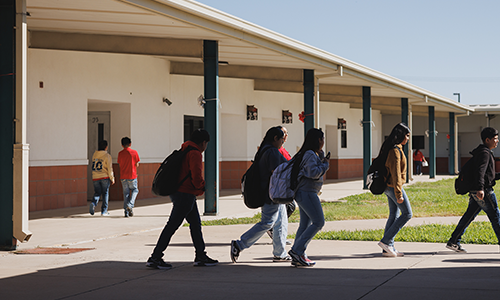
NWEA’s MAP Growth National Dashboard provides timely trends and data on U.S. student academic achievement and growth for grades K-8. This free public tool supports district leaders, state and federal policymakers, and other education stakeholders in interpreting local data within a broader national and state context. It helps identify areas of strength, shine light on disparities, and ground policy conversations in evidence.
Products: MAP Growth
Topics: COVID-19 & schools, Equity, Growth