Media mention
Research video news brief: Projecting the potential impact of COVID-19 school closures on academic achievement
October 2020

Description
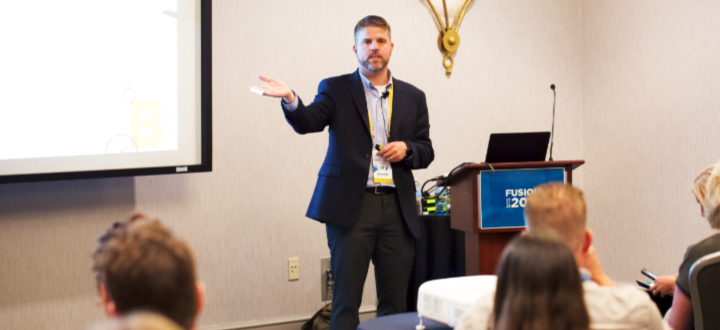
In this AERA video brief, Megan Kuhfeld shares major findings and implications of preliminary projections of the potential impact of COVID-19-related school closures in spring 2020 on student learning, published this month in Educational Researcher.
View the sourceAssociated Research
Related Topics

The current investigative study uses a multiple-indicator, latent-growth modelling (MLGM) approach to examine the longitudinal achievement construct and its invariance for MAP Growth.
Topics: Measurement & scaling, Growth modeling

Modeling student growth has been a federal policy requirement under No Child Left Behind (NCLB). In addition to tracking student growth, the latest Race To The Top (RTTP) federal education policy stipulates the evaluation of teacher effectiveness from the perspective of added value that teachers contribute to student learning and growth. Student growth modeling and teacher value-added modeling are complex.
Topics: Growth modeling, Measurement & scaling, Student growth & accountability policies

Modeling student test-taking motivation in the context of an adaptive achievement test
This study examined the utility of response time-based analyses in understanding the behavior of unmotivated test takers. For an adaptive achievement test, patterns of observed rapid-guessing behavior and item response accuracy were compared to the behavior expected under several types of models that have been proposed to represent unmotivated test taking behavior.
Topics: Measurement & scaling, Growth modeling, School & test engagement
The development of racial/ethnic and socioeconomic achievement gaps during the school years
This study examined developmental trends in academic achievement gaps between poverty and race/ethnicity groups from school entry to middle school using two large longitudinal data sets. We used time-varying effect modeling (TVEM) to estimate how the associations among race/ethnicity, poverty status, and math and reading achievement vary across continuous age from age 5 to age 15.
Topics: Equity, Growth modeling
Summer learning gaps worsen in higher grades, just not the way you think
Megan Kuhfeld shares surprising early findings from her work exploring patterns in students’ summer learning loss.
Education Week

Summer learning loss: What we know and what we’re learning
In this blog, Megan Kuhfeld shares background on what we know about summer learning loss, and the significant gaps that remain in our understanding that drive her work to take a fresh – and deeper – look at the phenomenon.
Summer learning loss: Does it widen the achievement gap?
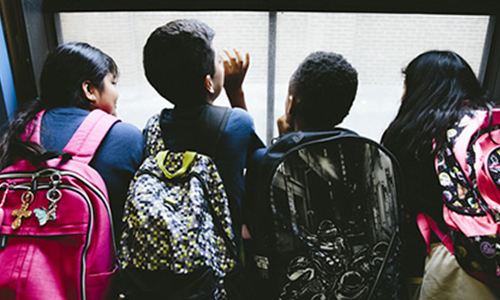
Megan Kuhfeld shares work exploring how differing patterns of summer learning loss or growth may impact academic achievement gaps.