Data visualization
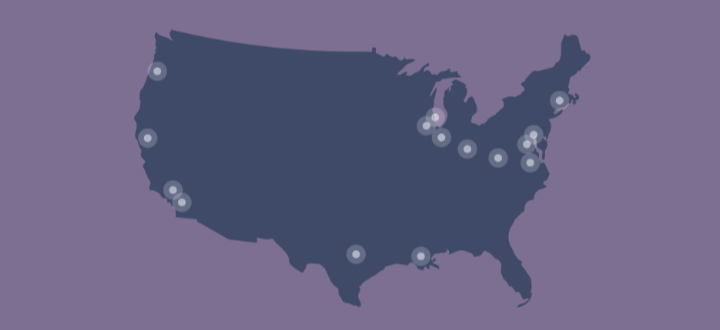
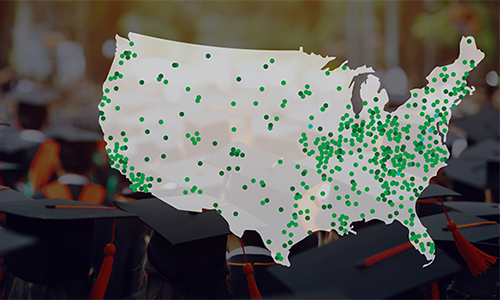
Research partnership map
2020
Description
Through partnerships with respected universities, foundations, and think tanks, and collaborations with school systems across the country, NWEA researchers work to expand understanding and bring new insights to improve education and learning. Explore this interactive map to learn more about some of our research partnerships.
See MoreRelated Topics
User Guide and FAQ: MAP Growth National Dashboard
This user guide explains how to navigate the MAP® Growth™ National Dashboard, understand the key metrics and terms, make appropriate comparisons of data, and communicate findings responsibly. This guide also includes a robust “Frequently Asked Questions” section that provides in-depth answers about the dashboard and its uses.
Products: MAP Growth
Topics: Growth
Technical Appendix: MAP Growth National Dashboard
This is the accompanying technical appendix to the MAP Growth National Dashboard providing more details of the data and describing more fully the sample and methods used within the dashboard.
Products: MAP Growth
Topics: Growth
Using data from the MAP Growth National Dashboard, this Trends Snapshot report focuses on academic growth trends post-COVID and points to a positive turn for U.S. reading after years of stagnation. This positive trend was also noted for historically underserved groups who showed the largest reading gains from 2025 to 2026.
Products: MAP Growth
Topics: COVID-19 & schools, Growth, Math & STEM, Reading & language arts
The College Explorer from NWEA® helps students, parents, and teachers develop pathways to higher education. This powerful tool links MAP® Growth™ scores with national benchmarks for colleges, universities, and even specific majors. Together with goal setting and parent conferences, College Explorer can help students develop a plan, consider new possibilities, and put post-secondary dreams within reach.
Topics: Innovations in reporting & assessment, College & career readiness, High school
Achievement and Growth Norms for Spanish MAP Reading Fluency Foundational Skills
This technical report presents achievement and growth norms for Spanish MAP Reading Fluency Foundational Skills (grades K–3), enabling educators to interpret student performance and progress in early literacy domains relative to national peer groups.
Products: MAP Reading Fluency
Topics: Early learning, Item response theory, Measurement & scaling, Test design

Getting Algebra Placement Right: Expanding Opportunity and Strengthening Preparation
This research brief examines whether taking Algebra in 8th grade instead of 9th grade improves student outcomes. Using a nationwide sample of MAP Growth scores for middle schoolers, NWEA researchers looked at how many students who were ready for Algebra actually enrolled, and how outcomes were affected for students who were or were not ready for the course.
Products: MAP Growth
Topics: Empowering educators, Growth, Informing instruction, Math & STEM, Middle school
This is the technical appendix to the research brief, “Getting Algebra Placement Right: Expanding Opportunity and Strengthening Preparation,” which examines whether taking Algebra in 8th grade instead of 9th grade improves student outcomes.
Products: MAP Growth
Topics: Empowering educators, Growth, Informing instruction, Math & STEM, Middle school