White paper

How Post‑COVID Norm Shifts Change the Meaning of MAP Growth Metrics for School Accountability
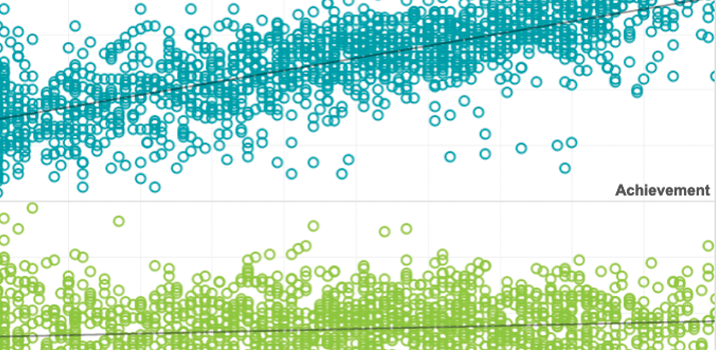
This white paper examines how the 2025 update to NWEA’s MAP® Growth™ national norms changes the interpretation and use of key norm referenced metrics in school accountability contexts. We show how shifts in post COVID achievement and growth patterns and the introduction of NWEA’s enhanced item selection algorithm (EISA), call for careful review of commonly used metrics.
Products: MAP Growth
Topics: COVID-19 & schools, Empowering educators, Growth, Guidance, Measurement & scaling, Student growth & accountability policies

This white paper examines the landscape of middle school science course offerings, enrollment patterns, and assessment outcomes. The analysis of data from 2,200 schools finds that multi-disciplinary course models now dominate versus single-course offerings, though access to course types varies by race and ethnicity. In addition, students in different course models performed similarly on assessments.
Products: MAP Growth
Topics: Equity, Math & STEM

Post-Pandemic School Closure Trends: Schools Serving Black Students Disproportionately Closed
This NWEA white paper explores the impacts of permanent school closures on communities. Findings suggest that despite challenges facing districts and the increased rhetoric around closures, most districts have continued to keep schools open; however, when schools were permanently closed, all communities are not affected equally: high poverty and high percentage Black students are more likely to close.
Topics: COVID-19 & schools, Growth

The MAP Growth theory of action describes key features of MAP Growth and its position in a comprehensive assessment system.
Products: MAP Growth
Topics: Equity, Measurement & scaling, Test design

MAP Growth linking studies: Intended uses, methodology, and recent studies
This document presents the intended uses and methodology of the MAP Growth linking studies, a description of the results provided in the linking study reports, and a summary of the recent linking studies conducted by NWEA to incorporate the new 2020 norms.
Products: MAP Growth
MAP Reading Fluency theory of action
The MAP Reading Fluency theory of action shows the hypothesized mechanisms of change and intermediate goals leading to the overarching goal of helping all students read fluently with comprehension.
Products: MAP Reading Fluency
Topics: Equity, Measurement & scaling

User guide for interpreting the NWEA state dashboard: Exploring the educational impacts of COVID-19
This guide explains the analyses, statistics, terms, and data included in the NWEA state dashboard, Exploring the Educational Impacts of COVID-19.
Topics: COVID-19 & schools, Innovations in reporting & assessment