Guide
MAP Growth Goal Explorer User’s Guide and FAQ
February 2026

Description
This user’s guide for the MAP Growth Goal Explorer describes how to use this interactive tool, the benchmarks it uses to provide context on student growth goals, a framework for goal setting, instructions for how to download information from the tool, and answers to frequently asked questions.
Read the user guideAssociated Research

Data visualization
Related Topics
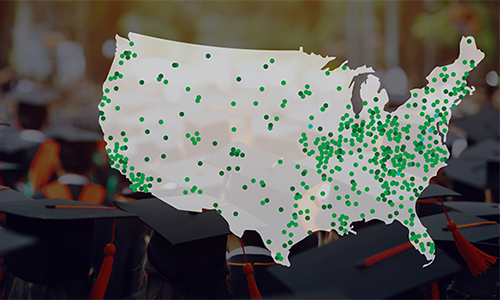
The College Explorer from NWEA® helps students, parents, and teachers develop pathways to higher education. This powerful tool links MAP® Growth™ scores with national benchmarks for colleges, universities, and even specific majors. Together with goal setting and parent conferences, College Explorer can help students develop a plan, consider new possibilities, and put post-secondary dreams within reach.
Topics: Innovations in reporting & assessment, College & career readiness, High school

This is the technical appendix to the research brief, “Getting Algebra Placement Right: Expanding Opportunity and Strengthening Preparation,” which examines whether taking Algebra in 8th grade instead of 9th grade improves student outcomes.
Products: MAP Growth
Topics: Empowering educators, Growth, Informing instruction, Math & STEM, Middle school

Getting Algebra Placement Right: Expanding Opportunity and Strengthening Preparation
This research brief examines whether taking Algebra in 8th grade instead of 9th grade improves student outcomes. Using a nationwide sample of MAP Growth scores for middle schoolers, NWEA researchers looked at how many students who were ready for Algebra actually enrolled, and how outcomes were affected for students who were or were not ready for the course.
Products: MAP Growth
Topics: Empowering educators, Growth, Informing instruction, Math & STEM, Middle school
This is the technical appendix to the “Struggling adolescent readers left behind: Evidence of post-COVID-19 declines and pathways forward” research brief, which highlights an urgent challenge in academic recovery: middle school reading.
Products: MAP Growth
Topics: COVID-19 & schools, Empowering educators, Growth, Middle school, Reading & language arts

Struggling adolescent readers left behind: Evidence of post-COVID-19 declines and pathways forward
Using data from the MAP Growth National Dashboard, this research brief highlights an urgent challenge in academic recovery: middle school reading. While students have shown encouraging progress in math and elementary reading since the pandemic, reading achievement among grades 6-8 remain stagnant, with the lowest-performing students falling even further behind.
Products: MAP Growth
Topics: COVID-19 & schools, Empowering educators, Growth, Middle school, Reading & language arts

How Post‑COVID Norm Shifts Change the Meaning of MAP Growth Metrics for School Accountability
This white paper examines how the 2025 update to NWEA’s MAP® Growth™ national norms changes the interpretation and use of key norm referenced metrics in school accountability contexts. We show how shifts in post COVID achievement and growth patterns and the introduction of NWEA’s enhanced item selection algorithm (EISA), call for careful review of commonly used metrics.
Products: MAP Growth
Topics: COVID-19 & schools, Empowering educators, Growth, Guidance, Measurement & scaling, Student growth & accountability policies

This is the technical appendix for the NWEA research brief titled, “Behind at the Starting Line,” which examines Kindergarten test scores from more than 400,000 U.S. students and noting patterns that can predict academic success or identify students at risk of falling further behind. This early identification is key for educators, enabling them to intervene and influence learning trajectories before the next critical milestone: third grade.
Products: MAP Growth
Topics: Informing instruction, Early learning, Empowering educators, Growth