Research report
Equating WCPM scores across passages of MAP Reading Fluency
March 2020
Description
NWEA equated words-correct-per-minute (WCPM) scores from oral reading passages included in the NWEA MAP Reading Fluency assessment. Equipercentile equating with loglinear presmoothing was applied to convert raw WCPM scores from a non-reference passage to those from a reference passage. The goals of this study were to (1) develop a method to choose a reference passage and passage pairs for equating WCPM scores from a large number of passages and (2) determine if equated WCPM scores provide a more accurate indication of students’ oral reading fluency ability compared to the raw WCPM scores from passages that vary in difficulty.
See MoreRelated Topics
MAP Growth Course-Specific Tests Technical Report for 2024–2025
This comprehensive technical report documents the design, development, and validation of MAP Growth Course-Specific assessments for the 2024–2025 school year. It presents evidence of psychometric quality, including adaptive testing methods, reliability, validity, fairness, and score interpretation across grades and courses.
Products: MAP Growth
Topics: Computer adaptive testing, Item response theory, Measurement & scaling, Test design
Using data from the MAP Growth National Dashboard, this Trends Snapshot report focuses on academic growth trends post-COVID and points to a positive turn for U.S. reading after years of stagnation. This positive trend was also noted for historically underserved groups who showed the largest reading gains from 2025 to 2026.
Products: MAP Growth
Topics: COVID-19 & schools, Growth, Math & STEM, Reading & language arts
Achievement and Growth Norms for Spanish MAP Reading Fluency Foundational Skills
This technical report presents achievement and growth norms for Spanish MAP Reading Fluency Foundational Skills (grades K–3), enabling educators to interpret student performance and progress in early literacy domains relative to national peer groups.
Products: MAP Reading Fluency
Topics: Early learning, Item response theory, Measurement & scaling, Test design
This is the technical appendix to the “Struggling adolescent readers left behind: Evidence of post-COVID-19 declines and pathways forward” research brief, which highlights an urgent challenge in academic recovery: middle school reading.
Products: MAP Growth
Topics: COVID-19 & schools, Empowering educators, Growth, Middle school, Reading & language arts

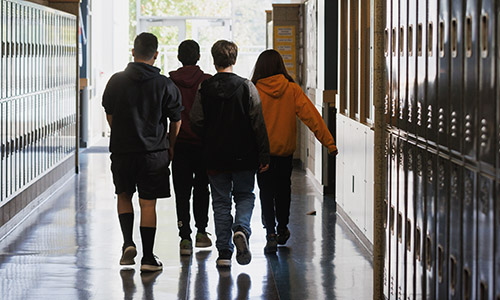
Struggling adolescent readers left behind: Evidence of post-COVID-19 declines and pathways forward
Using data from the MAP Growth National Dashboard, this research brief highlights an urgent challenge in academic recovery: middle school reading. While students have shown encouraging progress in math and elementary reading since the pandemic, reading achievement among grades 6-8 remain stagnant, with the lowest-performing students falling even further behind.
Products: MAP Growth
Topics: COVID-19 & schools, Empowering educators, Growth, Middle school, Reading & language arts
How Post‑COVID Norm Shifts Change the Meaning of MAP Growth Metrics for School Accountability
This white paper examines how the 2025 update to NWEA’s MAP® Growth™ national norms changes the interpretation and use of key norm referenced metrics in school accountability contexts. We show how shifts in post COVID achievement and growth patterns and the introduction of NWEA’s enhanced item selection algorithm (EISA), call for careful review of commonly used metrics.
Products: MAP Growth
Topics: COVID-19 & schools, Empowering educators, Growth, Guidance, Measurement & scaling, Student growth & accountability policies
2025 MAP Growth Norms Technical Manual
The 2025 norms update addresses several critical factors: evolving U.S. student demographics, documented shifts in academic performance following the COVID-19 pandemic, and the item-selection algorithm in the newly enhanced MAP® Growth™.
Products: MAP Growth
Topics: Measurement & scaling