Unassigned Asset Type
Can test metadata help schools measure social-emotional learning?
2019

Description
Social-emotional learning (SEL) competencies like self-efficacy and conscientiousness can be predictive of long-term academic achievement. But they can also be difficult to measure. In a new study led by NWEA’s James Soland, researchers investigated whether assessment metadata – the way students approach tests and surveys – can provide useful SEL data to schools and educators. Soland joins CPRE research specialist Tesla DuBois to discuss his findings, their implications, and the promise and limitations of student metadata in general.
See MoreRelated Topics

MAP Growth Goal Explorer User’s Guide and FAQ
This user’s guide for the MAP Growth Goal Explorer describes how to use this interactive tool, the benchmarks it uses to provide context on student growth goals, a framework for goal setting, instructions for how to download information from the tool, and answers to frequently asked questions.
Topics: Innovations in reporting & assessment, Empowering educators
MAP Reading Fluency with Coach Evidence Base
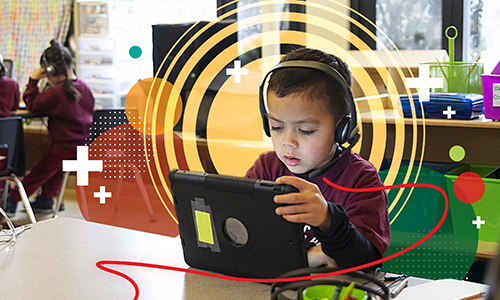
This document provides an overview of the research underlying MAP Reading Fluency with Coach’s AI-powered intelligent reading tutor and the research on key elements of early literacy instruction. It describes the components of the MAP Reading Fluency with Coach pedagogy and the research base supporting each component.
Products: MAP Reading Fluency
Topics: Early learning, Empowering educators, Innovations in reporting & assessment, Reading & language arts

Exploring the educational impacts of COVID-19
This visualization was developed to provide state-level insights into how students performed on MAP Growth in the 2020–2021 school year. Assessments are one indicator, among many, of the student impact from COVID-19. Our goal with this tool is to create visible data that informs academic recovery efforts that will be necessary in the 2022 school year and beyond.
Topics: COVID-19 & schools, Innovations in reporting & assessment

Executive Summary: Content proximity spring 2022 pilot study
This executive summary outlines results from the Content Proximity spring 2022 pilot study, including information on the validity, reliability, and test score comparability of MAP Growth assessments that leverage this new item-selection algorithm.
Products: MAP Growth
Topics: Computer adaptive testing, Innovations in reporting & assessment, Test design
Content Proximity Spring 2022 Pilot Study Research Report
The purpose of this research report is to provide detailed information about updates to the MAP Growth item-selection algorithm. This brief includes results from the Content Proximity pilot study, including information on the validity, reliability, and test score comparability of MAP Growth assessments that leverage this new item-selection algorithm.
Products: MAP Growth
Topics: Computer adaptive testing, Innovations in reporting & assessment, Test design

This study compared the test taking disengagement of students taking a remotely administered an adaptive interim assessment in spring 2020 with their disengagement on the assessment administered in-school during fall 2019.
Topics: Equity, Innovations in reporting & assessment, School & test engagement

This study evaluates the effects of asking items throughout the passage (i.e., embedding items) to achieve a more precise measure of reading comprehension by removing barriers for students to demonstrate their understanding. Results showed a significant impact of embedding comprehension items within reading passages on the measurement of student achievement in comparison to answering items at the end of the passage.
Topics: Equity, Innovations in reporting & assessment, Reading & language arts