Equity
It remains a critical challenge to ensure all children—regardless of race, ethnicity, gender, socio-economic status, and/or ability—have access to a high-quality education. We are at a pivotal time where communities and schools are navigating issues of equity, poverty, and opportunity gaps against a backdrop of shifting education policy. With access to exceptional data and a multi-disciplinary team of researchers and research partners, we are able to provide unique insight into these important issues.
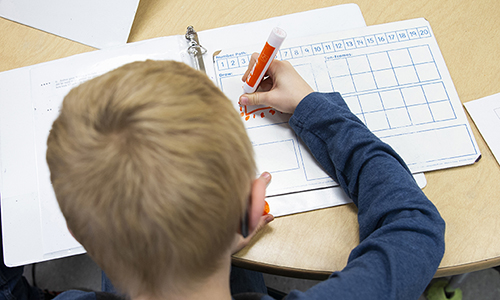
Understanding differential growth during school years and summers for students in special education
New research examining academic achievement and growth of students in special education and their peers who were never in special education during each school year and summer in grades K-4 shows that students with disabilities grow as much or more academically during the school year than their peers without disabilities during some years, but that steeper summer learning losses for students with disabilities contribute to widening disparities.
Topics: Equity, Growth modeling, Seasonal learning patterns & summer loss
Understanding differential growth during school years and summers for students in special education
This study compares within- and across-years academic growth for students who were ever in special education (ever-SPED) to students who were never in special education (never-SPED) in grades K-4. Ever-SPED students grew more in math and reading than never-SPED students during many school years, but lost more learning during every summer than their peers, leading to expanding disparities. These findings suggest that summer learning opportunities are crucial for improving educational outcomes for students with disabilities.
Topics: Equity, Growth modeling, Seasonal learning patterns & summer loss

Measuring middle school achievement trajectories for college readiness
This study identifies students’ academic trajectories in the middle grades relative to a set of college readiness benchmarks. We apply math and reading college readiness benchmarks to rich longitudinal data for more than 360,000 students across the nation. Student-level and school-level demographic characteristics significantly predict academic trajectories.
Topics: Equity, College & career readiness, Middle school
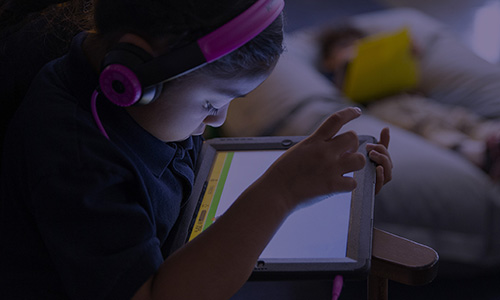
Preparing early learners: Considerations for supporting the kindergarten class of 2021
Among the many ways in which schools are being transformed by the COVID-19 pandemic, the change in kindergarten enrollment is likely to have important consequences in classrooms across the nation. Because the academic and nonacademic skills students develop in their preschool and early elementary school years are foundational to important longer-term outcomes, understanding these changes and finding ways to effectively support our youngest students’ learning is critical for educators and leaders. Drawing on recent research, we offer four timely considerations for district, school, and classroom leaders.
Topics: Equity, COVID-19 & schools, Early learning
Within-year achievement gains for English Learners
This study reports achievement levels and fall-to-spring gains in grades K to 8 for three groups of English Learners (ELs): ever-ELs who were ever eligible for service; current-ELs who continue to require service; and dually-identified students eligible for both EL and Special Education services.
Topics: Equity, English Language Learners
Learning during COVID-19: Initial findings on students’ reading and math achievement and growth
These visualizations allow you to explore key questions from our report, Learning during COVID-19: Initial findings on students’ reading and math achievement and growth.
Topics: Equity, COVID-19 & schools

In this study, we examine seasonal patterns of racial/ethnic achievement gaps in kindergarten through eighth grade using a national sample of over 2.5 million students.