Innovations in reporting & assessment
Emerging technologies allow for a variety of methods to assess students and report data specific to the needs of different stakeholders. These various approaches can result in assessments that are more engaging for students, along with reporting that provides more insightful, useful information for students, families, and educators.

This study evaluates the effects of asking items throughout the passage (i.e., embedding items) to achieve a more precise measure of reading comprehension by removing barriers for students to demonstrate their understanding. Results showed a significant impact of embedding comprehension items within reading passages on the measurement of student achievement in comparison to answering items at the end of the passage.
Topics: Equity, Innovations in reporting & assessment, Reading & language arts

Variation in respondent speed and its implications: Evidence from an adaptive testing scenario
The more frequent collection of response time data is leading to an increased need for an understanding of how such data can be included in measurement models. Models for response time have been advanced, but relatively limited large-scale empirical investigations have been conducted. We take advantage of a large data set from the adaptive NWEA MAP Growth Reading Assessment to shed light on emergent features of response time behavior.
Topics: School & test engagement, Innovations in reporting & assessment
A method for identifying partial test-taking engagement
This paper describes a method for identifying partial engagement and provides validation evidence to support its use and interpretation. When test events indicate the presence of partial engagement, effort-moderated scores should be interpreted cautiously.
Topics: Measurement & scaling, Innovations in reporting & assessment, School & test engagement
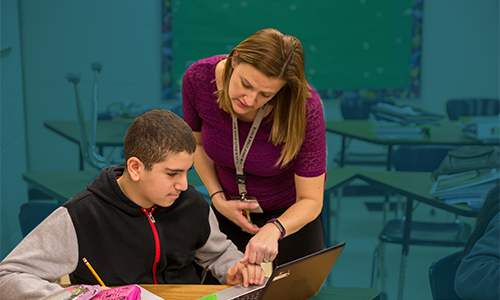
User guide for interpreting the NWEA state dashboard: Exploring the educational impacts of COVID-19
This guide explains the analyses, statistics, terms, and data included in the NWEA state dashboard, Exploring the Educational Impacts of COVID-19.
Topics: COVID-19 & schools, Innovations in reporting & assessment
Using retest data to evaluate and improve effort-moderated scoring
This study investigated effort‐moderated (E‐M) scoring, in which item responses classified as rapid guesses are identified and excluded from scoring, and its affect on score distortion from disengaged test taking.
Topics: Measurement & scaling, Innovations in reporting & assessment, School & test engagement
An intelligent CAT that can deal with disengaged test taking
This book presents varied applications of artificial intelligence (AI) in test development, including research and successful examples of using AI technology in automated item generation, automated test assembly, automated scoring, and computerized adaptive testing.
Topics: Measurement & scaling, Innovations in reporting & assessment, School & test engagement

The impact of test-taking disengagement on item content representation
Rapid-guessing can distort test scores and adversely affect measurement. New research shows how disengaged responses can also distort content representation.
Topics: Measurement & scaling, Innovations in reporting & assessment, School & test engagement