Growth modeling

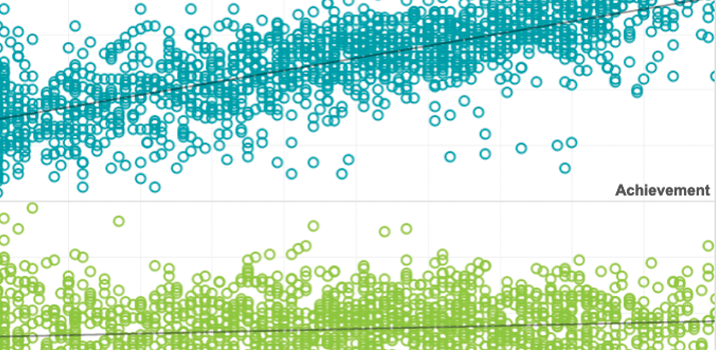
In this study, we apply the Compound Polynomial or “CP” model in a school evaluation context. The CP model addresses the seasonality of student test scores by simultaneously estimating between- and within-year growth.
Topics: Growth modeling, Seasonal learning patterns & summer loss, Student growth & accountability policies

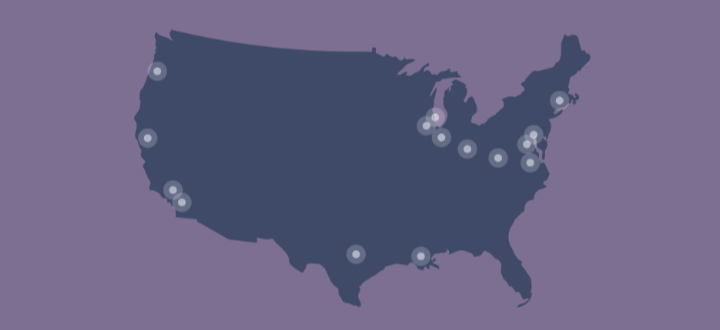
Validating the SEDA measures of district educational opportunities via a common assessment
his study describes a convergent validity analysis of the SEDA growth estimates in mathematics and English Language Arts (ELA) by comparing the SEDA estimates against estimates derived from NWEA’s MAP Growth assessments.
Topics: Equity, Growth modeling, Measurement & scaling

School effectiveness, summer loss and federal accountability
Learn more about the effect of seasonality on estimates of school effectiveness and how ignoring summer loss can impact which schools are identified as low performers.
Topics: Growth modeling, Seasonal learning patterns & summer loss, Student growth & accountability policies

Do students’ social-emotional learning (SEL) skills in middle school predict being off-track to graduate high school?
Topics: Growth modeling, High-growth schools & practices, Social-emotional learning

Validating the SEDA measures of district educational opportunities via a common assessment
SEDA provides a unique measure of educational opportunity across the United States. New research supports SEDA achievement scores, but also reveals some differences in growth estimates.
Topics: Equity, Growth modeling, Measurement & scaling

Reconciling long-term education policy goals with short-term school accountability models
Learn more about the effect of seasonality on estimates of school effectiveness and how ignoring summer loss can impact which schools are identified as low performers.
Topics: Growth modeling, Seasonal learning patterns & summer loss, Student growth & accountability policies
In this study, repeated measures of math achievement and self-efficacy are used to fit a variety of latent curve models that jointly estimate growth in both constructs.
Topics: Student growth & accountability policies, Growth modeling, Social-emotional learning