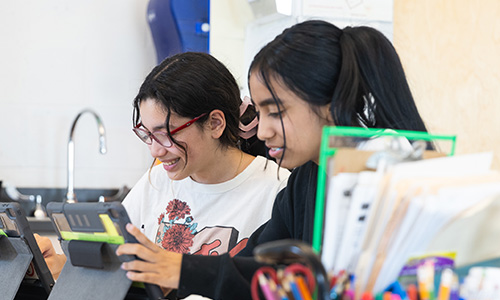
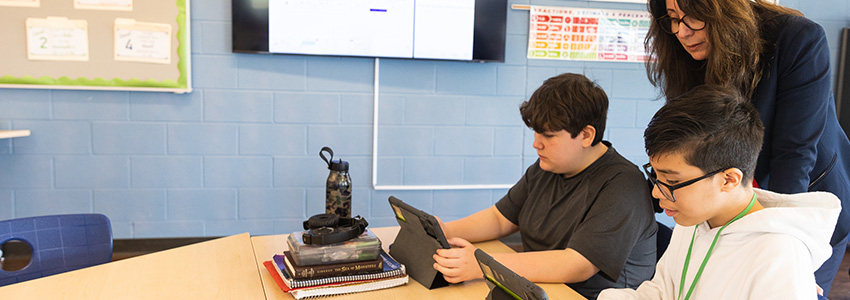
 At the height of pandemic recovery, tutoring became one of the clearest ways districts tried to respond to students’ academic needs. The goal was urgent and student-centered: create more opportunities for students to receive targeted support during the school day, especially in reading and math.
In Guilford County Schools (GCS) in Greensboro, North Carolina, that commitment grew into one of the largest home-grown tutoring programs in the country. With Elementary and Secondary School Emergency Relief, or ESSER, funding, GCS expanded tutoring from 5,251 students in the 2021–22 school year to 17,348 students across grades and subjects by 2023–24. Even after the program was reduced in size in 2024–25, the district’s tutoring effort remained unusually large for a locally developed model, serving about 7,700 students in early literacy and middle grades math.
That rapid expansion created challenges and opportunities. Hiring hundreds of tutors, supporting more than 100 schools, aligning tutoring with instruction, and monitoring whether students received the intended dosage were difficult tasks under intense time pressure. But scale also created tutor pipelines, cross-department routines, data systems, and school-level expertise that did not previously exist. GCS’s transition to a more focused and sustainable tutoring model was not simply the result of serving fewer students; it was made possible by years of learning, problem-solving, and building the partnerships and infrastructure needed to sustain tutoring beyond ESSER.
A recent study of GCS, conducted in collaboration with AIR-CALDER, offers a close look at that transition. The study examines implementation, not causal effects on student achievement. That distinction matters. The findings show how GCS strengthened implementation support for tutoring through changes in staffing, supervision, data visibility, MTSS alignment, and dosage consistency, but they do not demonstrate impacts on student outcomes. Instead, the study focuses on what it takes for a district to build, sustain, and continuously improve a tutoring system after emergency funding ends.
From rapid expansion to a more focused, sustainable model
Like many districts, GCS used ESSER funds to move quickly. The district hired upward of 600 tutors, expanded tutoring to almost all 126 schools, and broadened the program from an initial focus on middle and high school math in Title I schools to reading and math across grades and schools. During this period, the tutoring program relied on an annual ESSER-funded budget of roughly $8–9 million.
That expansion reflected a real commitment to students. District leaders described tutoring as a way to give students additional opportunities to strengthen skills and grow after pandemic disruptions. At the same time, GCS leaders learned that providing tutoring at this scale required systems, not just funding and a commitment to access. The district had to recruit and train tutors, integrate tutoring with MTSS, establish expectations for dosage and group size, and monitor implementation across schools. The study describes how GCS invested in system-level support for hiring, supervision, data use, curriculum planning, and alignment with high-dosage tutoring practices.
When ESSER funding ended, GCS did not abandon tutoring. Instead, district leaders worked to sustain the program through a combination of philanthropic partnerships, district and school improvement resources, and a more targeted program design. In the 2024–25 school year, tutoring focused on K–3 early literacy and grades 6–8 math, and the number of students served declined from 17,348 to about 7,700. This shift was not simply a response to fewer available dollars. As leaders pursued new funding sources and integrated tutoring into district improvement efforts, they had to be more explicit about how tutoring advanced strategic priorities. That process helped sharpen the district’s focus on areas of greatest need and strongest alignment with existing instructional systems.
Sustaining tutoring involved more than reducing scale. It required strategic funding, strong partnerships, and clear alignment with long-term district goals.
What changed on the ground
The most visible change in GCS was the reduction in scale. The more important changes were the systems that made tutoring more coherent: a stronger tutor pipeline, clearer supervision and support, stronger alignment with MTSS, and better data visibility. CGS educators also noticed a few places where progress remained uneven.
A stronger tutor pipeline
During the ESSER-funded expansion, GCS built a large tutor workforce. But demand continued to outpace supply, especially in secondary, remote, and hard-to-staff schools. District leaders reported challenges finding tutors with the right subject expertise, particularly for secondary math, and schools sometimes faced mismatches between available tutors and student needs.
Over time, however, GCS built more durable hiring routines. The tutoring department worked across HR, finance, and technology to manage hiring, onboarding, payroll, and tutor placement. By 2024–25, HR had created part-time school-based tutor positions, allowing onboarding to move through standard district systems.
With a smaller program and years of hiring experience, leaders could be more selective about which tutors to retain and where to place them. The share of tutors with teaching certification increased from less than 22% in 2023–24 to almost 80% in 2024–25. Schools also played a larger role in identifying tutors who fit their students and instructional needs.
Clearer supervision and support
During the rapid expansion of tutoring, district-level supervision was limited. The tutoring team was often in “onboarding mode,” focused on getting tutors into schools. With limited central office staff supporting more than 100 schools, district leaders acknowledged it was difficult to know what was happening inside tutoring sessions.
After ESSER ended, reduced hiring demands created more room for instructional support. GCS added more structure through district-led observations, clearer expectations for weekly planning meetings, and more district-led training tied to curriculum and MTSS in partnership with literacy and math departments. By then, many tutors had also become trusted members of their school communities. These changes helped shift tutoring from a loosely connected set of school-level activities toward a more coherent instructional support system, especially in elementary literacy.
Stronger alignment with MTSS
Perhaps the most important shift was how tutoring was positioned within the broader instructional system. In earlier years, schools were given flexibility in how they implemented tutoring, which resulted in wide variation. Some students were assigned based on data, while others were assigned based on immediate classroom needs. Group sizes and schedules also varied, and tutoring sometimes became general classroom support rather than targeted intervention.
In 2024–25, GCS more tightly integrated tutoring with MTSS. The shift reflected both changes in funding and organizational capacity. As the district increasingly relied on Title I and other school improvement resources, leaders needed to demonstrate how tutoring supported federally funded school improvement efforts and broader goals for school effectiveness. Positioning tutoring within the district’s MTSS framework helped establish that connection. Meanwhile, the tutoring, MTSS, literacy, and math departments had developed stronger working relationships and a greater capacity to collaborate.
Together, these conditions supported a more coordinated approach to tutoring, with schools expected to use standard treatment protocols, group students based on data, monitor progress, and align tutoring content with approved intervention resources. This alignment was especially strong in early literacy, where state policy, curriculum resources, and district training were more developed.
Better data visibility
GCS also invested in data systems that made tutoring more visible. While the district had dashboards early on, these were primarily designed for district-level monitoring and offered limited insight into students’ day-to-day tutoring experiences. Over the years, GCS refined these tools, developing school- and student-level views to track sessions, attendance, dosage, and outcomes.
These tools allowed district leaders and schools to see patterns that were previously hard to detect. They could now identify when tutoring was not occurring as expected, when group sizes were growing too large, and when certain schools needed additional support. Just as importantly, the data became part of ongoing school-level conversations about grouping, scheduling, dosage, and instructional adjustments.
Where progress remained uneven
While implementation support improved overall, progress was not uniform across contexts. The largest gains were observed in early literacy, where tutors and supervisors reported more consistent pull-out sessions, smaller groups, data-driven student assignment, and more stable tutoring groups over time. In middle school math, progress was harder. Tutors often had less relevant content experience, schedules were more constrained, intervention resources were less developed, and students’ needs varied widely.
Moreover, in schools serving large numbers of students below grade level, the core assumptions of high-dosage tutoring, such as small groups and frequent sessions, became difficult to maintain. Leaders in these schools often had to make tradeoffs, such as increasing group sizes or using tutors to support core instructional efforts that reached more students in need of support.
Similar tradeoffs occurred at the district level. Decisions about where to place tutors, which grades and subjects to prioritize, and which schools would receive services required balancing broad access with the conditions needed to deliver tutoring as intended.
These tradeoffs should not be minimized. Districts and schools often have to choose between serving more students or providing more intensive support. In GCS, concentrating resources in K–3 literacy, grades 6–8 math, and Title I schools strengthened implementation but also limited access for some students who could benefit from tutoring. The result is an ongoing tension between sustainability, equity, and reach.
Lessons for district and school leaders
GCS’ experience offers several lessons for leaders trying to sustain academic interventions after temporary funding ends.
First, scale can build capacity, even when it creates challenges. GCS’ large ESSER-funded tutoring program surfaced staffing, scheduling, supervision, and data problems. But it also helped the district build tutor pipelines, cross-department routines, MTSS connections, partnerships with local organizations and philanthropies, and data systems that could support future academic interventions.
Second, sustainability requires continuous improvement. GCS sustained tutoring through a combination of a more focused program design, existing district systems, school improvement resources, philanthropic partnerships, feedback from schools, and continued cross-department collaboration. The lesson is not to serve fewer students. Rather, it is to align program scope with the resources, infrastructure, and organizational capacity needed to sustain tutoring over time while continuing to meet student needs.
Third, implementation evidence should be interpreted carefully. Stronger dosage, clearer supervision, and educators’ perceptions of improved quality are important signs of progress. But they are not the same as causal evidence of student impact. Districts need both: implementation data for improvement and outcome evidence on student learning.
Finally, the purpose of tutoring should remain centered on students. GCS continued investing in tutoring because district leaders saw it as a way to provide students with additional opportunities to strengthen skills, connect with adults, and receive support aligned to their needs. The systems matter because they make that student-centered goal more achievable. At the same time, districts should continue examining student outcomes and be willing to refine their approach, or pursue alternative strategies, if the evidence suggests students are not benefiting as intended.
Learn more
If you’re interested in reading the full research, you can access the working paper, “The end of ESSER: Lessons about sustaining tutoring at scale from Guilford County Schools,” on the AIR-CALDER website.