
 Ms. Ramírez has five minutes, a MAP® Growth™ Student Profile report, and a pressing question: What does Miguel need next?
Miguel, a fifth grader, participates eagerly in class discussions and proudly turns in (most) assignments, yet his recent assessment results surprised her. As she reviews his instructional area strengths and suggested focus skills, the data begins pointing toward instructional decisions that put Miguel—the learner, not the score—at the center.
We live in a world full of data, and schools are no exception. But data literacy doesn’t develop by osmosis, and teachers don’t need more click paths; we need practical ways to interpret what we’re seeing and translate it into action. Think of the MAP Growth Student Profile report not as a technical document but as a set of lenses you can use to understand each learner more clearly.
In a recent article, we explored how the Class Profile report helps teachers see patterns across a group. Here we zoom in from class trends to individual students. By the end of this article, you’ll be able to:
- Frame the Student Profile report in clear “zones” and guiding questions
- Interpret what each section is designed to answer
- Avoid common misconceptions
- Use quick, practical teacher moves to turn insights into next steps
Let’s start by walking through the report as a series of student-centered questions, because isn’t it time we put the “student” back in the Student Profile report?
Getting your bearings: The main “zones” of the Student Profile report
Once you open a MAP Growth Student Profile report, you’ll see four major sections that each answer a different question:
- Comparisons. “Am I okay?” “Where am I right now compared to peers?”
- Instructional areas. “What am I good at?” “Where can I grow?”
- Growth goal. “Where am I going next?”
- Growth over time. “How far have I come?”
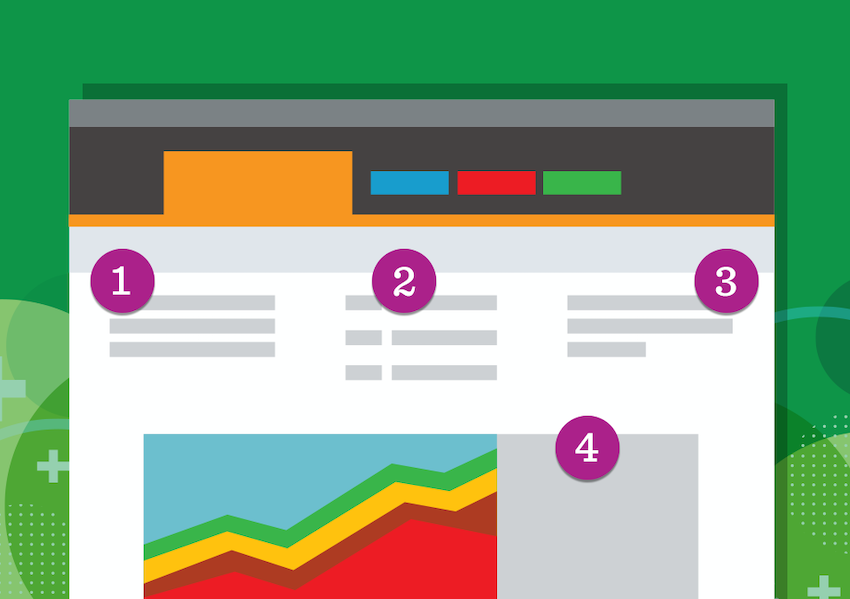 Think of these like panels on a dashboard. Each tells a different part of the student’s learning story—and none should be read alone.
Zone 1: Comparisons: “Am I okay?” “Where am I right now compared to peers?”
Let’s start with the section that often carries the most emotional weight: comparisons.
Even when no one says it out loud, this is the section that can trigger the quiet worries: “Am I behind?” “Did I fail?” “Is this bad?” ”I didn’t do as well as my friends.” This is where careful framing—and reframing of the word “comparison”—matters.
This zone shows how a student’s current achievement compares to other students who took the same assessment. It includes percentile information and achievement context. A helpful analogy is the pediatrician’s height and weight chart. When a child is measured, the doctor plots today’s numbers relative to other children the same age. It’s not a judgment; it’s a reference point. This data point guides next steps; it doesn’t define identity. The comparisons section of the Student Profile report is similar. It says, “Here’s where you are right now, compared to a group of students similar to you, on this day, so we can decide where to go next.”
Common misconceptions to address
- Percentile ≠ intelligence (or “percent correct”). “Percentile” reflects relative standing, not how “smart” a student is or how many items they answered correctly.
- Below average ≠ failure. “Below average” means fewer students scored at or below this level at this moment in time.
- Above average ≠ “finished growing.” “Above average” doesn’t mean a student is done growing. Every learner has next steps.
- One score ≠ the full story. The assessment was one hour of one day, and a single score doesn’t paint a complete picture. Classroom evidence, student work, and formative assessment still matter.
A one-minute teacher move
Try this language with students: “This is a temperature check, not a pass/fail result. It helps us see where you are right now so we can plan what’s next. I also use your classwork and projects to understand your learning. Let’s name one strength to leverage and one focus area to explore.” This keeps dignity intact and direction clear.
Zone 2: Instructional areas: “What am I good at?” “Where can I grow?”
This section of the MAP Growth Student Profile report breaks performance into skill-based areas. It turns a general statement like “You’re strong in math” into something more instructionally useful: “You’re strong at identifying and comparing shapes” or “You’re ready to strengthen fraction equivalence.”
This is where the report becomes especially actionable. Instead of a single RIT score, you get skill-level clues that can inform grouping, scaffolds, and stretch opportunities. This zone is your treasure chest for small-group formation (“Who needs similar exposure to skills?”); tutoring and WIN time focus (“What can we hit in 30 minutes?”); intervention planning (“What’s something they need, right now?”); and student goal-setting conversations (“How can we get you more practice with this skill?”).
There aren’t enough hours in the day to just get “more of everything.” This zone helps us understand which specific skills a student should target. It provides smarter focus.
Common misconceptions to address
- Green ≠ being fully ready for everything next. Intentional review, increased depth of existing concepts, and consistent skills application are essential. It’s important to prioritize rigor, and instruction will be more successful if we understand what a student is ready for.
- Red ≠ contradiction of good grades. A RIT score doesn’t override grades. Classroom grades can reflect effort, completion, and participation alongside mastery. That’s why triangulating data sources is a best practice.
- Instructional areas ≠ exact lesson plans. Instructional areas are signals and categories, not a standards checklist or scripted curriculum.
A one-minute teacher move
Form a just-in-time small group anchored to one foundational skill that appears on several students’ Student Profile report. Or, with a student, co-create two asset-based statements and one next step: “You analyze shapes well, and you use precise math language when you explain your work. Next, we’ll build fraction equivalence with visuals.”
Zone 3: Growth goal: “Where am I going next?”
The growth goal section of the MAP Growth Student Profile report gives a projected growth target. It’s a number but—more importantly—it’s a direction.
If a student sets a goal to run seven miles by June, the number matters, but the plan matters more. What practice, pacing, and checkpoints will help them get there? How will they feel if they only run six? Is that okay?
A growth goal is not a verdict. It’s a forward-looking marker that helps teachers and students align effort and expectations.
Common misconceptions to address
- Projection ≠ promise. Remember that a projection is a modeled path, not a guarantee.
- Goal “setting” ≠ “set it and forget it.” Goals should be revisited and—most importantly— adjusted.
- “Goal met” ≠ all done. It’s wonderful when a student meets a goal, but remember that learning continues with new depth and applications.
- “Goal not met” ≠ failure. Missing a goal signals a need to recalibrate supports and strategies—and set a new goal.
A one-minute teacher move
Frame it like this: “This is our training plan. We’ll check mile markers along the way and adjust if needed.” Work with students to define bite-sized milestones connected to real classwork so progress feels visible and attainable. I encourage you to use our downloadable forms “Student goal setting” and “Student goal setting: From X to Y, how and when?”
Zone 4: Growth over time: “How far have I come?”
This section appears in the MAP Growth Student Profile report when you have multiple test events. It shows a trend line across time.
If comparisons are today’s vitals, this is the training log. You wouldn’t judge a season of training by one workout! A log reveals patterns and payoffs. Growth-over-time data helps build academic identity around progress, not perfection—the entire point of the MAP Growth assessment.
Common misconceptions to address
- One dip ≠ regression. Don’t let one dip throw everything off track. Look for trends, not single points.
- A steep jump ≠ permanent mastery. When a student has a big leap in growth, celebrate! Then evaluate why the jump happened and implement a plan to help a student retain what they’ve learned.
A one-minute teacher move
Print out their growth chart, and invite students to annotate it with prompts like, “What do you notice?” “What have we tried that might have helped?” “What habit should we keep?” Then capture (and share out!) a one-sentence reflection: “Since fall, I’ve improved most in ___ by ___.”
Student self-assessment can be a game changer. Making time for it can support good habits and improve engagement. And when students share their goals aloud, it normalizes that we all have somewhere to go.
Bringing it back to the learner
MAP Growth data doesn’t teach students; teachers do. But when the Student Profile report is used as a set of lenses—grounded in strengths, growth, and real instructional questions—it helps ensure the data serves the learner, not the other way around.
Most importantly—and perhaps unsurprisingly—the MAP Growth Student Profile report is a tool that works best when you start not with the score, but with the student.