 It’s easy to make assumptions about our youngest learners. Maybe you’ve heard that early elementary students were mostly spared from pandemic disruptions. Or that schools are failing boys. Or that delaying kindergarten gives kids a lasting academic edge. But what does the data actually say about early learners?
In “Big insights on your littlest learners,” the latest webinar in our Research Live series, NWEA researchers Megan Kuhfeld, Karyn Lewis, and Naomi Duran take a closer look at these common beliefs—and unpack what national MAP® Growth™ data reveals about early learning today.
Assumption #1: Early learners were largely spared from COVID disruptions
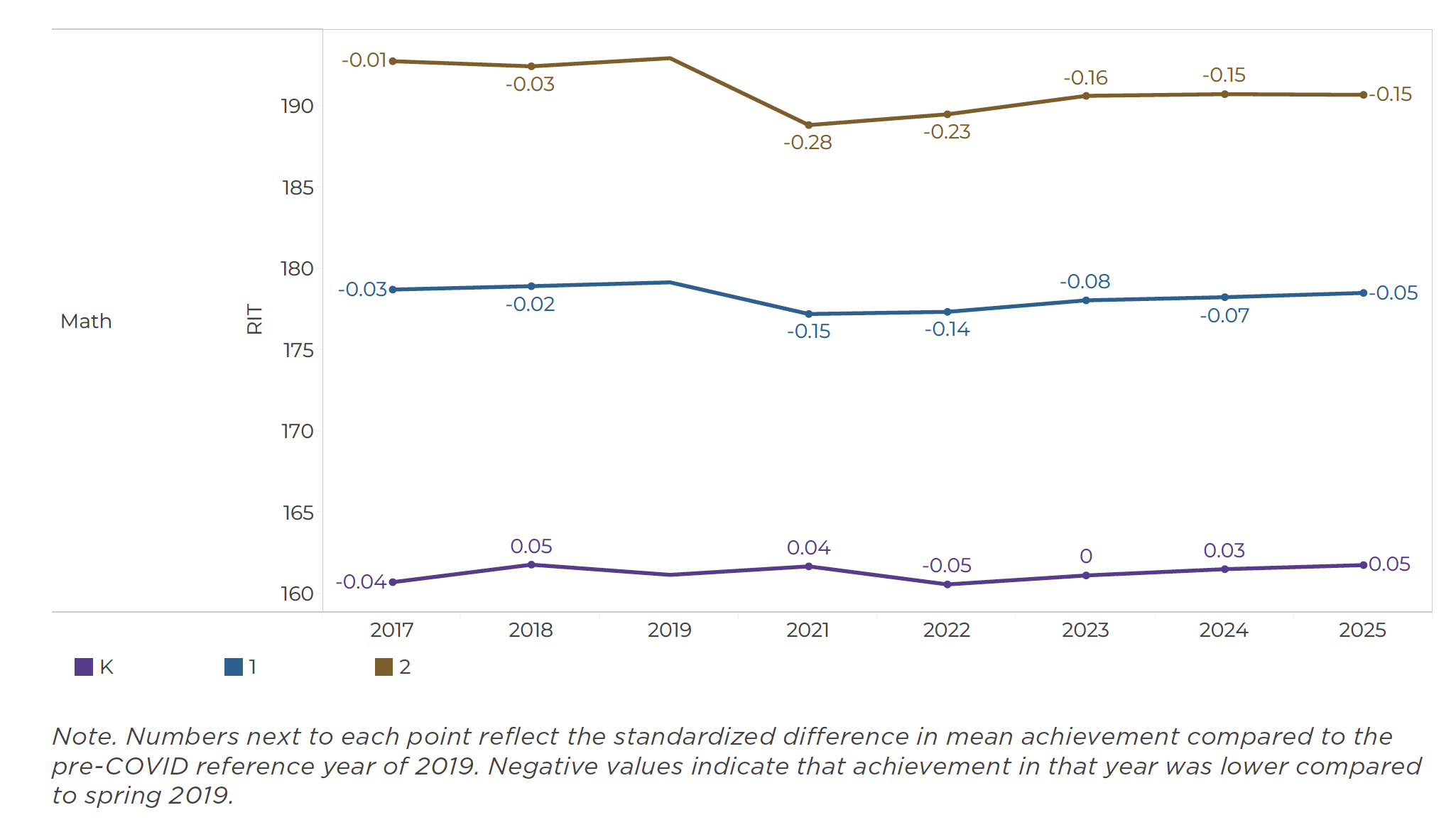
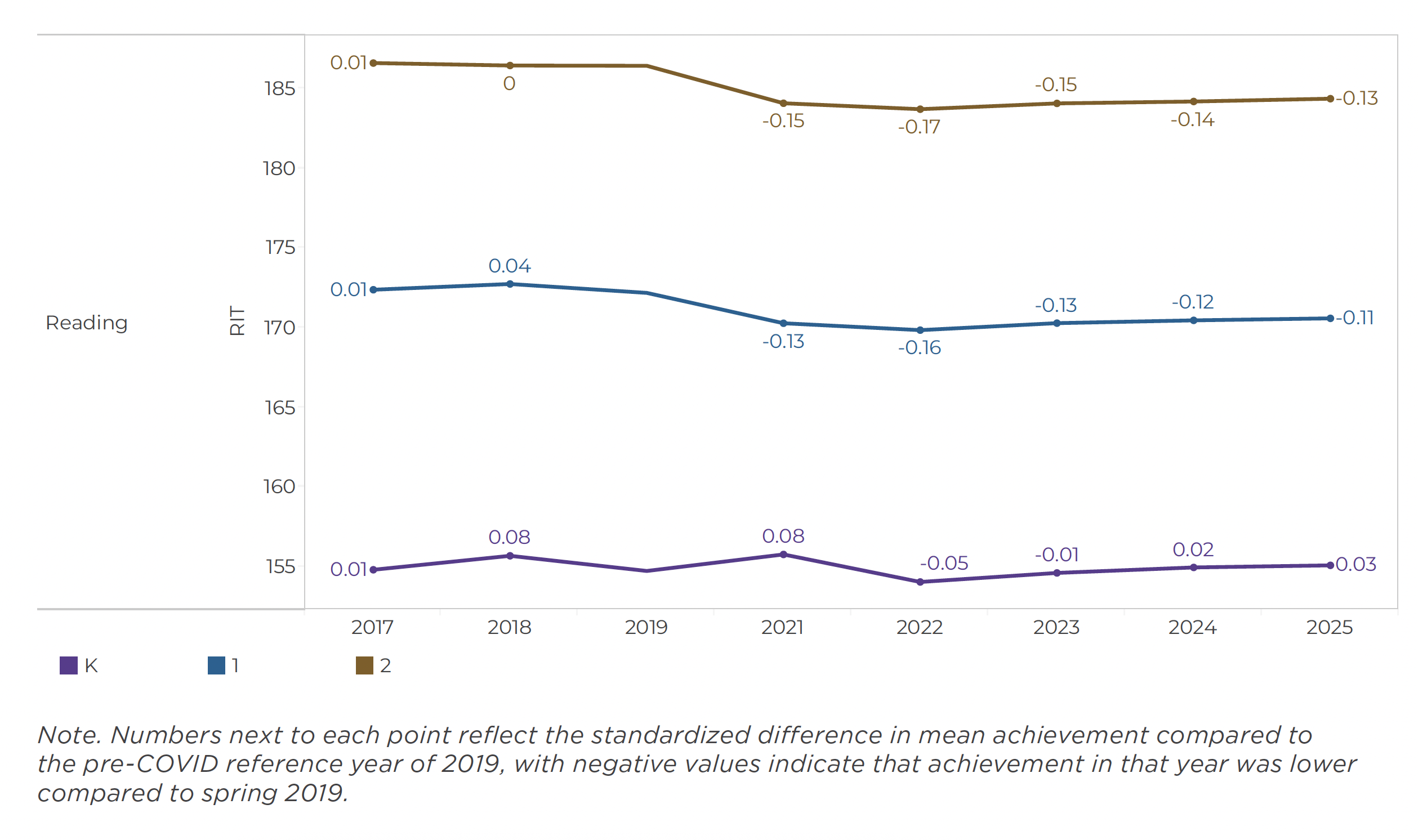
At first glance, it might seem like our youngest students bounced back quickly following COVID school closures. And in some ways, that’s true. According to data shared in the webinar, kindergarten math and reading achievement have remained mostly stable since the pandemic. But the story changes in grades 1 and 2, where math shows a modest, incremental recovery and reading remains stalled, with little evidence of returning to pre-pandemic levels.
Average K–2 spring math achievement levels, 2017–25
 Average K–2 spring reading achievement levels, 2017–25
 What this means for your classroom
If you teach first or second grade, this likely won’t surprise you. But it does underscore an important point: some of your learners may still need targeted support—especially in reading. As you plan instruction, consider the following questions:
- Is assessment data for my class showing students are behind?
- Are gaps showing up more in reading than math?
- What additional scaffolds might help accelerate recovery?
Learn more
Read our research briefs “Trend snapshots: COVID-19 recovery in K–3, positive recovery trends” and “From loss to recovery: Diverging paths and uneven gains across schools” to learn more about learning gaps and recovery following pandemic school closures.
Assumption #2: Schools are failing young boys
You’ve probably seen the headlines proclaiming that schools aren’t meeting the needs of boys. But the data tells a more nuanced story. According to the analysis shared in the webinar:
- Gender gaps do not widen during the school year
- Boys eventually catch up in math
- Girls maintain an advantage in reading, but the gap remains relatively stable
What this means for your classroom
While this analysis doesn’t mean gender differences don’t exist, it does suggest schools are not driving widening gaps between boys and girls. We encourage teachers to consider the following questions when looking at growth and achievement in their classroom:
- How are my individual students growing throughout the school year?
- Which instructional strategies are helping kids succeed?
- How can I support engagement with both girls and boys?
Learn more
For more on this research, see “Gender gaps in the early grades: Questioning the narrative that schools are poorly suited to young boys.”
Assumption #3: Delaying kindergarten gives students a lasting advantage
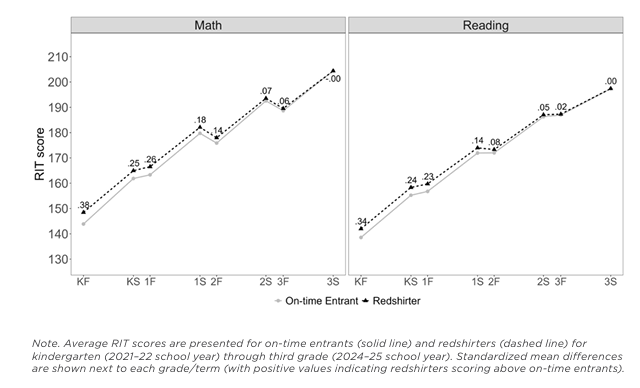
“Redshirting”—or delaying kindergarten entry—has become a popular strategy for families hoping to give their child a boost in school. And at first, it seems to work: students who delay entry start kindergarten with a noticeable academic advantage. That advantage disappears by the time kids reach third grade, however.
Math and reading performance for redshirted kindergarteners from kinder through grade 3
While redshirting offers young learners some advantages, including higher maturity, the loss of an academic edge isn’t the only downside. Redshirting can also result in additional childcare costs and a slightly higher risk of dropping out of high school and having lower earnings upon entering the workforce.
What this means for your conversations with families
When families ask educators about delaying kindergarten, the data can help guide a more informed conversation. Instead of focusing only on early advantages, consider the following:
- Will those benefits last?
- What are the long-term tradeoffs?
- What does this specific child need to be successful?
Learn more
See “Kindergarten redshirting: What families should know” and our research brief “Should kindergarteners be redshirted? Costs likely outweigh academic benefits” for more on this topic.
Watch the webinar
As our researchers demonstrate, early learners have not been completely insulated from pandemic disruptions, narratives about boys in school don’t always match the data, and popular solutions like redshirting may not deliver lasting benefits. Each of these insights has real implications for how we support students, plan instruction, and communicate with families.
To learn more, watch the webinar, now available on demand. And to read more about supporting early learners, see our archives of posts here on Teach. Learn. Grow. on ELA, the science of reading, math, using assessment data, and MAP Growth.