 Is it mere coincidence that the initial letters of “What I Need” spell WIN? For the students who take part in WIN time—a structured daily period for receiving support that directly targets their learning needs—the origin of the phrase doesn’t matter too much. What does matter is that whether students are in Tier 1, 2, or 3, WIN time personalizes their learning and helps them feel like they’re, well, winning.
In my last article on this topic, “How WIN time supports intervention strategies for students,” I introduced the concept of WIN time and explained how it works for students across the range of learning needs, from remediation to reinforcement to acceleration. Today, I’d like to go a bit deeper into how to approach the scheduling, flow, activities, and pitfalls of WIN time. With insights from Beth Praska, a senior implementation manager at NWEA, I’ll explore how to put WIN time into practice.
But first, let’s get clear on what WIN time is not meant to be: unguided time. “Too often, WIN time can turn into a glorified study hall,” says Beth. “We want it to be more structured than that.”
What is a WIN period in school?
If you read my previous article on WIN time, then you know it’s a dedicated block of daily intervention time (often 30 minutes, but sometimes up to an hour) that’s specifically designed to provide kids with personalized academic support based on their current needs. WIN time is distinct from traditional pull-out intervention because it includes all students at all learning tiers, not just those who are struggling to meet expectations.
In other words, WIN time isn’t just for the students who have fallen behind and need intervention. It’s also for students working at grade level and students who are ready for enrichment. By giving all kids the same dedicated period to do their work, teachers reduce the stigma that often comes with being pulled out of class for intervention.
How to structure a WIN block
There’s no single correct way to structure a block of WIN time, but there is one characteristic all successful WIN blocks share: flexibility. It’s not a time for rigid, fixed assignments; it’s a time for meeting each student’s current, specific academic need. And that means approaching WIN time with an open mind and willingness to pivot based on where students are.
Beyond flexibility, key considerations for how to structure a WIN block include:
- Scheduling. “It’s really helpful when WIN time can follow core instruction, so you have that immediate response,” says Beth. “We know timely feedback is helpful to students.”
- Grouping. Rather than static homeroom groupings, use skill-specific, need-based flexible groups that you can easily reconfigure based on upcoming instruction and students’ evolving abilities.
- Cross-class student sharing. When there’s more than one teacher at the same grade level, it opens the possibility of regrouping students across classrooms during WIN time. Beth explains: “Let’s say you’re going to reteach something you’re all working on, like double-digit multiplication. You could take students from other classrooms and have a focus group on double-digit multiplication, while other teachers focus on morphology or something else.”
- Staffing. Teachers shouldn’t have to go it alone. Ideally, they can work with leadership to engage interventionists, learning specialists, and paraprofessionals in reaching more kids with WIN time—and reaching them more effectively.
Sample WIN period schedule
With the caveat that the best WIN block for a classroom is the one designed specifically for that room and its students, it can be helpful to pick up ideas from places where WIN time is working well.
At one Kansas elementary school, for example, WIN time gets more than an hour every day: 30 minutes for math and 40 minutes for reading, with an additional 10–20 minutes for students who need the most intensive support. The school uses three instructional coaches (ELA, math, and technology) alongside classroom teachers.
In New York, the Greater Amsterdam School District devised a three-week cycle for WIN time in which students spent 36 minutes every day with a designated teacher. Three grade levels focused on ELA, and three focused on math. Students were further sorted into seven ELA groups and five math groups, based on pre-assessment scores. In addition to remedial and reinforcement support, the WIN groups also had an enrichment component for students achieving above grade level. The district gave students a post-assessment at the end of the three-week cycle, showing significant gains across all grade levels.
Another example comes from Arkansas, where Willowbrook Elementary runs a daily 30-minute WIN block for both literacy and math, embedded in the master schedule. All staff are assigned a WIN time group. Groups are fluid and reconfigured monthly based on grade-level assessment data.
WIN time instructional strategies
Beth describes four key instructional approaches as essential to successful WIN time: small-group instruction, explicit teaching, progress monitoring, and goal setting.
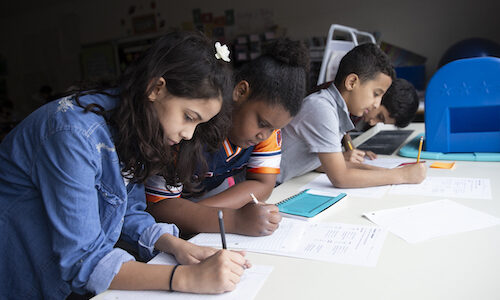
- Small-group instruction. This is the centerpiece of WIN time. Rather than working with the whole class, the teacher moves among small groups of students, delivering targeted support while some students work independently or with peers. “Using WIN time for small-group work makes sense,” says Beth. “You probably already have small groups embedded in your literacy block, and maybe your math block. This is just another opportunity.”
- Explicit teaching. In successful WIN time blocks, the instructional content is highly granular, whether it’s multi-digit multiplication or specific vowel teams. Teachers use formative data they’ve collected in whole-group lessons to determine where and how to drill down into the specifics.
- Progress monitoring. Whether through formal mini-assessments, exit tickets, or informal check-ins, tracking student progress is key. “You definitely don’t want to wait for the next interim assessment,” says Beth. “You want to collect that granular, ongoing data.” For ELA, a tool like MAP® Reading Fluency™ with Coach can be especially helpful for progress monitoring.
- Goal setting. Goal setting helps teachers plan, and it gives students ownership of their own progress, a powerful motivator. Goals should be concrete, measurable, and short-term, and they should apply to all students, regardless of tier.
For more ideas, check out “Cooperative learning: 4 steps for effective student grouping in a dynamic classroom,” “Everything you need to know about goal setting for students,” and “Goal setting 101: Start by asking students what they think.”
WIN time activities
So, you’ve got a brand-new WIN block on your daily schedule. How exactly do you and your students fill the time? Here are just a handful of possibilities:
- Reteaching sessions. In small, teacher-led groups, target specific skill gaps observed during whole-group instruction.
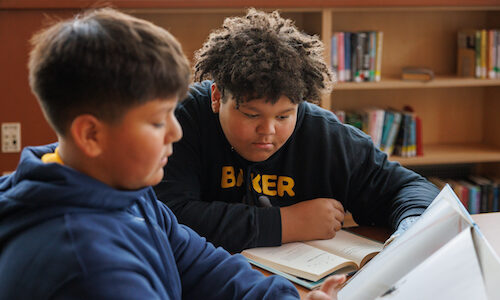
- Skill-based practice. Students can read aloud with a peer to review vocabulary or improve words correct per minute, or they can work on math problems together.
- Writing conferences. Students can bring a draft of something they’ve written to a teacher or peer group for targeted feedback.
- Collaborative work. Students can work with a partner or in small groups on a shared task, with each member contributing.
- Independent guided practice. Some students know what they need to do to complete a task or move a project forward; they just need the dedicated time and a bit of guidance.
- Enrichment tasks. For students who are meeting or exceeding expectations, WIN time is an opportunity to go to a deeper Depth of Knowledge (DOK) level. “A lot of our assessments really stop at DOK 3,” says Beth. “We can offer opportunities to go into that deeper DOK 4, where they’re working on those extended real-world problems.”
WIN block by grade level
Because developmental and academic needs differ greatly across elementary, middle, and high school settings, WIN blocks are meant to be adaptable based on grade level. Using the gradual release of responsibility framework as your guide, give elementary-level WIN blocks the tightest structure and then gradually increase student independence in the years that follow.
- Elementary school. In elementary school, you’ll emphasize structured routines and foundational skill-building through teacher-led small groups and guided practice. “WIN time should always be actively engaging so that it doesn’t just turn into a study hall,” Beth reminds us. “It’s meant to move the needle forward for every student.”
- Middle school. In middle school, you’ll balance targeted support with increasing student independence, often with flexible grouping and skill-based workshops. At this level, where students have busier schedules and more than a single homeroom teacher, WIN time may happen before school, at the end of the day, or during an advisory block of time. Again, be flexible in scheduling as well as with instructional content.
- High school. In high school, you’ll focus on flexible, student-driven support such as tutoring, credit recovery, and college or career readiness, including ACT/SAT prep. “We want to maintain accountability, but it needs to be a little more student-driven so that we get buy-in from them,” says Beth.
WIN period tips and best practices
To build WIN blocks that work—meaning students feel engaged and it shows in their achievement—it helps to refer to the strategies and tactics that have worked well for others. Building on my previous article on WIN time, here are seven tips and best practices to keep in mind:
- Use data to drive decisions. Start with high-quality data from interim assessments like MAP® Growth™ to identify needs and create initial groupings. Layer in formative assessment data to fine-tune groups and track progress.
- Keep groups flexible and fluid. Avoid locking students into static groups. Let WIN time groups evolve based on shifting needs, upcoming instruction, and demonstrated mastery. Think in MAP Growth RIT bands rather than individual plans for every student. This makes differentiation more manageable.
- Ensure strong leadership support. Leaders must carve out time for teachers to engage in data meetings and collaborative planning. Systems-level support makes the difference between WIN time that functions well and WIN time that devolves into unproductive study hall.
- Communicate purpose to students and families. Make sure students understand that WIN time is about their individual growth, not a punishment or reward. Engage kids in growth conversations about their learning goals and pathways. Use conferences and other touch points to let families know about WIN time and keep them updated on progress.
- Monitor progress and adjust regularly. Establish a regular cycle of review and adjustment. Use monthly data meetings to evaluate student progress and escalate or de-escalate support as needed.
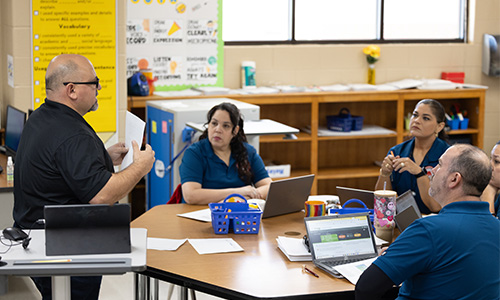
- Prioritize teacher and stakeholder collaboration. Make WIN time discussions a standing agenda item in PLC meetings and grade-level meetings. Don’t add a new meeting about WIN time; rather, embed the topic in existing ones. Your colleagues will thank you.
- Remember: enrichment is for everyone. Offer enrichment opportunities to all students, not just the ones who need extra help. Remember that even students who do need extra help also benefit from enrichment—and the chance to have a little fun.
Common challenges with WIN time
Like any classroom initiative, WIN time comes with its share of pitfalls and unintended consequences. Knowing in advance where these challenges are likely to appear will help you address and correct them early.
- Challenge 1: Treating WIN time as unstructured free time, the “glorified study hall” Beth cautions against. Without a clear purpose for every student every day, WIN time can drift and become disconnected from what’s happening in the classroom.
- Challenge 2: Using static groups. “I’ve seen it happen,” says Beth. “A student needs fluency work, so from September to May, they’re in a fluency intervention. That’s not using the time with intention.” For students who aren’t making progress, a static group makes it harder for teachers to identify their actual need and respond accordingly. For students who need enrichment, a static group can lead to boredom and loss of motivation.
- Challenge 4: Lacking clear goals. Without a destination, WIN time can become unfocused and unproductive. “Think of it like a long road trip,” Beth suggests. “You know where you want to end up, and you keep moving in that direction.”
- Challenge 4: Neglecting ongoing data. Don’t rely only on interim assessment data to set or adjust groups. There’s a lot to learn along the way. Beth extends the road trip metaphor: “You take breaks along the way and recalibrate. Do we need gas? Is this the best route? You collect data along the way to determine if you’re on the right path.”
WIN time for the win
Purposeful and flexible. That’s what a successful WIN block looks like. Teachers can’t meet with every student every day during WIN time, and that’s OK. What they can do is create a thoughtful, sustainable structure in which students know where they’re going, have the support they need to get there, and feel a sense of freedom along the way.