 Foundational literacy remains one of the highest priorities for schools, especially in the early grades. Yet educators are constantly balancing screening requirements, progress monitoring, and the need to protect valuable instructional time.
Assessing reading skills can sometimes feel time intensive and difficult to implement consistently across classrooms. At the same time, we know how critical it is to monitor students’ foundational literacy skills. These skills serve as the building blocks for fluent reading and strong comprehension later on.
This is where a simple if-then mindset can help bring clarity to decision-making.
Why if-then thinking matters in early literacy
Early reading success depends on timely insight and the early identification of learning gaps. An if-then approach helps educators move beyond simply collecting data to focusing on what students need next instead.
When we connect assessment results to instructional action, data becomes more than information—it becomes a roadmap for supporting student growth. Let’s explore a few common early literacy scenarios and how MAP® Reading Fluency™ can help.
Scenario 1: Inconsistent assessment
If assessing foundational literacy skills provides inconsistent data, then educators need a more efficient, scalable approach to screening and progress monitoring.
MAP Reading Fluency provides consistent data across classrooms while offering detailed insight into foundational reading skills, including decoding and language comprehension.
If we reference the Simple View of Reading, we know that comprehension develops through the interaction of both word recognition, which includes decoding, and language comprehension.
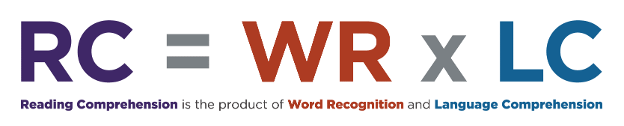 This foundation allows educators to identify specific areas of strength and opportunity and use MAP Reading Fluency’s foundational skills data to drive meaningful instructional decisions.
For students who route to Oral Reading, educators also receive data on accuracy, rate, and comprehension. These measures provide additional insight into fluency development. For example:
- A student with strong accuracy but slower reading rate may benefit from repeated reading and fluency practice.
- A student who has difficulty with accuracy may need additional language supports, phonics instruction, or multisyllabic word reading instruction.
For more on assessing foundational skills, read “Foundational skills progress monitoring in MAP Reading Fluency helps students catch up.”
Scenario 2: Need for scalable, faster insight
If you need a faster, more scalable way to assess foundational reading skills, then systems should streamline universal screening and ongoing progress monitoring.
MAP Reading Fluency helps reduce testing burden while preserving valuable instructional time. An entire classroom can complete a screening assessment in approximately 25 minutes, while progress monitoring assessments typically take just 5–7 minutes per student. The result is rich, actionable data that can support quicker instructional adjustments.
During my time facilitating NWEA professional learning workshops, I worked with districts across the country that used MAP Reading Fluency’s Instructional Planning report to divide and conquer small-group instruction among grade-level teams. By leveraging every student’s zone of proximal development (ZPD) alongside research-based instructional resources, teachers were able to make small-group instruction more targeted, engaging, and effective.
Scenario 3: Persistent reading struggles
If students continue to struggle with reading despite strong classroom instruction, then there may be underlying skill gaps that aren’t immediately visible.
MAP Reading Fluency can help uncover phonic gaps, fluency challenges, and comprehension breakdowns that may be impacting student performance.
I experienced this firsthand while working with one of my nephews. Although he was working hard, he continued to have trouble with reading fluency. As we dug deeper, I realized he was still sounding out unfamiliar words phoneme by phoneme. With intentional support focused on multisyllabic word reading and Greek and Latin roots, we began addressing the underlying skills that were slowing him down.
This experience reinforced an important lesson: when we identify the root cause of a reading challenge, we can provide more targeted support. MAP Reading Fluency with Coach extends this support through personalized one-on-one tutoring with Coach Maya, providing students with real-time micro-interventions designed to strengthen foundational reading skills.
Scenario 4: Districts focus on early literacy outcomes
If your district is working to strengthen early literacy outcomes while reducing teacher burden, then you might need tools to balance instructional insight, efficiency, and scalability.
MAP Reading Fluency supports early identification through universal screening indicators that can help educators quickly identify students who may need additional support or intervention. The assessment also tracks progress over time, allowing educators to celebrate growth while making real-time instructional adjustments when needed.
Recently, I met with a large district to analyze MAP Reading Fluency data from fall to spring. As we reviewed student results, district leaders quickly began using the data to shape summer professional learning plans and prioritize support for the upcoming school year. The district was also able to create an action plan for using MAP Reading Fluency’s progress monitoring tool. Because progress monitoring can be done in as little as five minutes per student, leadership committed to ensuring educators were using it consistently to track progress regularly and set goals with students, not simply to check a box.
That’s the power of actionable data. It doesn’t just tell us where students are today; it helps us plan where they need to go next.
From screening to action
When we think about the students we serve, literacy assessment isn’t simply about collecting data—it’s about understanding how students read. When educators have access to efficient, meaningful data, they can make clearer instructional decisions. And those decisions can lead to stronger outcomes for students.
The ultimate goal isn’t assessment for the sake of assessment. The goal is using assessment to identify needs, target support, and accelerate growth.
Three questions to ask yourself about your early literacy assessment
As you think about whether your early literacy assessment is meeting the needs of your school or district, ask yourself the following questions:
- Are we consistently and efficiently assessing foundational reading skills across classrooms?
- Do we have clear insight into why students are struggling with reading?
- Can we quickly translate assessment data into targeted instruction and intervention?
Keep the focus on your students
Early literacy is foundational to everything that follows. We cannot afford to leave any student behind on their reading journey.
As you reflect on your current reality, which if-then statement resonates most with you? Remember: The goal isn’t more testing. The goal is earlier insight, more targeted support, and stronger instructional decisions that help every student become a successful reader.